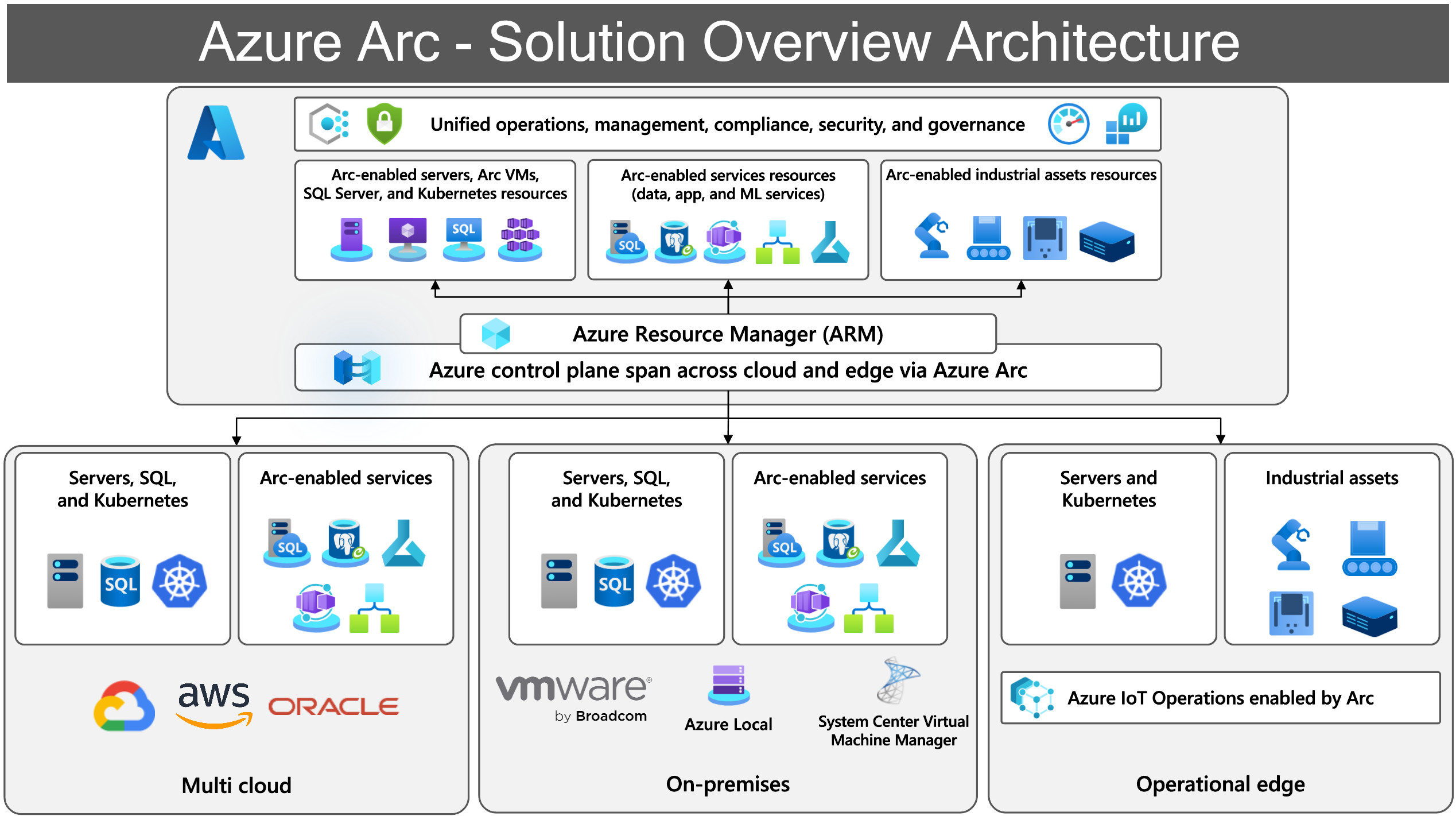
Azure Arc — One Control Plane for Many Resources
How to manage infrastructure outside of Azure
Azure Arc is a resource manager (RM) that allows existing infrastructure — whether on-premises or in another cloud — to be managed and represented as an Azure resource. Through Arc, you can onboard existing servers, Kubernetes clusters, virtual machines and other resources without migrating them to Azure. Each resource receives a logical representation in Azure and can be managed via the Azure Portal, CLI or PowerShell using the same management, security and governance tools used for native Azure services.
What are the benefits?
In modern IT environments, most organisations operate a combination of on-premises infrastructure and multiple cloud providers. This leads to fragmented management tooling, inconsistent security policies, more complex monitoring and often higher costs. Azure Arc addresses this by providing:
1. A single pane of glass via the Azure Portal
- Azure Arc enables the connection of servers, Kubernetes clusters and virtual machines via Arc-enabled agents and connectors — regardless of whether they are on-premises, in AWS, GCP or edge environments. All these resources are managed centrally through Azure Resource Manager, with no need for separate consoles or tools for each platform.
2. Consistent management and governance
- Apply Azure Policy, RBAC and tags to resources regardless of where they are located. Through Azure Arc, organisations can enforce configuration, compliance and access policies on non-Azure resources in exactly the same way as on native Azure services. Concepts such as custom locations and resource bridges enable logical grouping and management of resources across different environments as part of a unified Azure structure.
3. Enhanced security
- Through integration with Microsoft Defender for Cloud and centralised threat monitoring. Arc-onboarded servers and Kubernetes clusters can be enrolled in Defender for Cloud for security assessments, recommendations and threat detection. Azure Arc also enables the extension of Extended Security Updates (ESU) for older versions of Windows Server that are no longer in mainstream support.
4. Lower operational overhead
- Use familiar Azure tools and processes instead of maintaining separate platforms for each environment. Identity management via service principals and Azure AD, the use of Azure Arc Gateway for controlled and secure communication, and the ability to manage Azure data services (such as Azure SQL Managed Instance on Kubernetes) all reduce complexity and the need for specialised tooling across different infrastructure environments.
If your goals include:
➡ Centralised management and unified policies across your entire infrastructure
➡ Operating in regulated industries with compliance requirements
➡ Applying cloud-native practices to infrastructure outside of Azure