What is Microsoft Fabric?
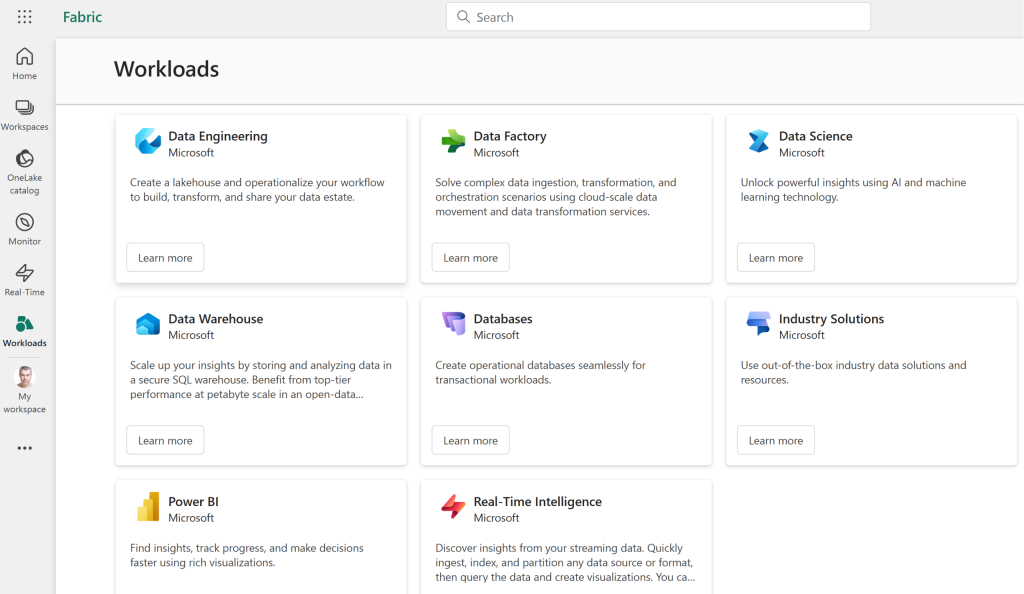
Microsoft Fabric is a cloud-based data and analytics platform in Azure that integrates all core data-related processes — ingestion, storage, processing, analysis, visualisation and automation. Fabric eliminates the complexity of managing multiple separate products by bringing everything together in a single portal and a centralised data store called OneLake.
How does the technology work?
- OneLake: A unified storage layer for all enterprise data — eliminating data silos and redundant copies.
- Delta Parquet format: An open, standardised format that enables easy processing by any tool or programming language.
- Unified workspaces: Dedicated environments for data ingestion, processing, visualisation, analytics and automation — all within a single ecosystem.
- Centralised security and access control: A single point of governance and management.
- Microsoft 365-style interface: Familiar and intuitive for existing Microsoft users.
What business problems does it solve?
- Fragmented and hard-to-access data spread across different teams and systems
- Complex integration and maintenance of multiple data platforms
- Lack of trust in reports and visualisations
- Difficulty scaling infrastructure as the business grows
- Inconsistent licensing models and unpredictable costs
Who is Microsoft Fabric suitable for?
- Mid-size and large companies with complex data needs and processes
- IT departments managing security, access control and integrations
- Data engineers, data scientists and BI analysts
- Business users who need fast and accurate reporting
- Organisations already using Power BI Premium
Who is it NOT suitable for?
- Small businesses with basic data processing needs (within the scope of Excel)
- Organisations not using Microsoft 365 or Azure and with no migration plan
- Teams that do not require scalable, integrated solutions or automation
Key benefits of Microsoft Fabric
- ➡ Data centralisation — OneLake
- ➡ Easy integration and management
- ➡ Single portal and unified interface
- ➡ Analytics, reporting and automation
- ➡ Security and regulatory compliance
- ➡ Predictable costs
Additional resources